
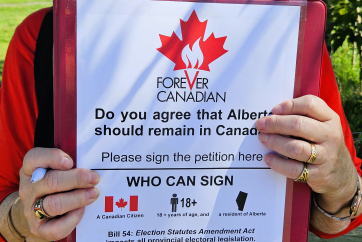
In Alberta, the review of the Alberta Forever Canada citizens’ initiative—which calls for reaffirming the province’s commitment to remaining part of Canada—is officially underway. According to Elections Alberta, the petition was successful: 438,568 valid signatures were counted, significantly exceeding the required threshold of 293,976. The document was submitted to the Speaker of the Legislative Assembly on December 1, 2025.
The Next Formal Step
The next formal step took place in the spring of 2026. On March 10, 2026, the Alberta Legislative Assembly established a special committee to review this initiative. This is explicitly stated in Government Motion No. 34, which states that the committee is to review the proposal from Alberta Forever Canada previously submitted to the legislature.
Deadlines Explained by Parliamentary Counsel
At the committee’s first meeting on April 21, 2026, parliamentary lawyers explained the key deadlines. The transcript states that the petition was referred to the committee on March 10, so it must report to the Legislative Assembly by June 8, 2026.
If Parliament is not in session by that date, then the next formal deadline is moved to November 11, 2026, that is, 15 days after the start of the fall session, scheduled for October 27.
At the same time, the same transcript separately explains that the committee chair may submit a report between sessions via an intersessional deposit even before parliament reconvenes in the fall. This means that the November postponement is a possible scenario, but not an automatic outcome.
Why a Political Conflict Arose
This is precisely why a political conflict arose around the meeting. At the committee meeting, the opposition proposed inviting the petition’s author, Thomas Lukashuk, to the next meeting, but this proposal was rejected by a vote of 3 to 2.
After that, the committee supported another proposal—to invite representatives from the Ministry of Justice and the Chief Electoral Officer for technical consultations.
Why talk of a possible delay
Separately, opposition members of the committee attempted to set a faster timeline and filed a motion for the committee to complete its work and report by May 7, 2026. The transcript shows that this proposal also failed: government members of the committee opposed it, and the motion was also rejected.
It was immediately after this that statements about a possible delay in the review began appearing in the public sphere.
Conclusion
The Petition for the Unity of Canada has not been canceled or halted, but its review is indeed moving slowly, and the committee did not support the earlier deadline of May 7.
At the same time, official documents show that a scenario involving consideration as late as November is possible only if the committee fails to or refuses to submit a report earlier between sessions. In other words, the issue at hand is not an already approved postponement until November, but rather the risk of such a development arising from the committee’s procedures and political decisions.