
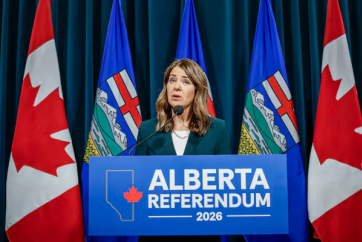
Alberta has officially approved the wording of the question to be put to a referendum on October 19, 2026. It will concern the province’s future as part of Canada and the possible initiation of the legal process to hold a separate mandatory vote on secession.
According to Elections Alberta, voters will be asked to choose one of two options. The first option is that Alberta should remain a province of Canada. The second is that the Alberta government should initiate the legal process required by the Canadian Constitution to hold a mandatory provincial referendum on whether Alberta should secede from Canada.
It is important to note that this will not be a direct vote on Alberta’s independence. This is an advisory, i.e., non-binding, question. If a majority of voters support the second option, this will not mean the province’s automatic secession from Canada. In fact, voters will be expressing their opinion on whether the government should initiate the legal process for a possible subsequent, mandatory referendum.
The question about Alberta’s future will be the tenth on the list of referendum ballots. Elections Alberta reports that each question will be presented on a separate, numbered, and color-coded ballot. Question No. 10 will be a multiple-choice question, while the other nine questions will be “yes” or “no” questions.
In addition to the question on a potential secession process, voters will also receive ballots regarding immigration policy and potential constitutional changes. These include questions about greater Alberta control over immigration, rules for access to provincial programs, citizenship verification requirements for voting, as well as ideas regarding changes to the role of the provinces in the Canadian constitutional system.
The new question stems from the situation surrounding the public initiative “A Referendum Relating to Alberta Independence”. In early 2026, Elections Alberta issued a petition proposed by Mitch Sylvester asking whether Alberta should cease to be part of Canada and become an independent state. For the petition to succeed, at least 177,732 signatures had to be collected, representing 10% of the votes cast in the 2023 provincial election.
In May, Elections Alberta reported that it had received the signature sheets after the signature-gathering campaign ended, but the verification process was put on hold due to a court ruling. The Alberta Court of Queen’s Bench temporarily suspended the certification of the petition following a lawsuit filed by the Athabasca Chipewyan First Nation and the Blackfoot Confederacy.
Alberta Premier Daniel Smith stated in her address that she supports Alberta remaining part of Canada, but at the same time criticized the court ruling on the petition and announced that the government would appeal it.
According to her, due to the length of the legal proceedings, the government decided to put a separate question to a vote this year.
Thus, on October 19, Albertans will vote not on immediate independence, but on a political direction: to leave things as they are or to allow the government to begin a formal constitutional process that could lead to a second referendum on secession in the future. This vote could be one of the most significant political moments of the year in Alberta and will be important not only for the province but for all of Canada.