
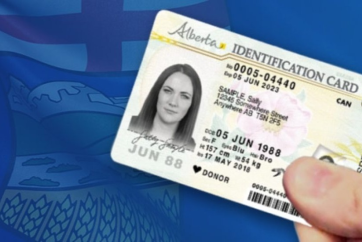
Alberta is preparing a significant change for the province’s residents: starting July 2, 2026, new and renewed driver’s licenses and provincial ID cards will contain more information than before. The government’s idea is simple—to create a single, convenient card to replace the several separate documents that people are often required to carry with them.
The Alberta government announced this in a press release titled “One card. That’s it.” The idea is that the new driver’s licenses and ID cards will include the Alberta Health Care insurance number, and for those who confirm their Canadian citizenship, a special citizenship marker will also be added.
In fact, the province wants to gradually phase out the old paper Alberta Health Care cards, which many Albertans are familiar with: a small paper document that is easy to lose, damage, or leave at home. Instead, the personal health number is planned to be integrated into a more secure plastic card—a driver’s license or provincial ID.
For many people, this could indeed be convenient. Today, when seeking medical services, you often need to show your health card along with a photo ID. After the changes, some residents will be able to use a single card that includes both their ID and their personal health number. The government explains this as a way to simplify access to services, reduce the number of documents in your wallet, and strengthen protection against fraud.
What Does the Citizenship Indicator Mean
It’s worth addressing the issue of citizenship separately, as this is what may raise the most questions for newcomers, permanent residents, temporary workers, students, and others living in Alberta who are not Canadian citizens.
According to official information, you do not need to be a Canadian citizen to obtain a driver’s license or ID card in Alberta. However, when applying for the first time or renewing a document, you must confirm that you have the legal right to be in Canada. If the submitted document confirms Canadian citizenship, the corresponding Canadian citizenship marker will be added to the card. If a person is not a citizen but has the right to live in Canada, they can still obtain a driver’s license or ID card, just without this marker.
Original documents may be required to confirm the right to reside in Canada. For Canadian citizens, this could be, for example, a Canadian birth certificate, a Canadian passport, or a citizenship certificate. For permanent residents—a permanent resident card. For other categories of residents, relevant documents issued by the Canadian government that confirm the right to reside in the country may be used. If a person cannot immediately provide the necessary documents, the government provides for a one-time 60-day grace period to obtain or submit the required proof.
How the health number on the card will work
Another important point is the health number on the card. To add a Personal Health Number to a driver’s license or ID, you will need to confirm your eligibility for the Alberta Health Care Insurance Plan (AHCIP). To do this, when visiting a registry agent, you must have a physical Alberta Health Care card or a mobile health card, as well as documents confirming your right to reside in Canada. For citizens and permanent residents with AHCIP coverage, this integration is expected to begin during the first phase of the rollout.
The transition will take place gradually. This means that people do not all have to rush to update their documents on the very first day. In most cases, the new card can be obtained during a routine renewal of a driver’s license or ID. If a person wishes to add a citizenship marker or health number before the document’s renewal date, they are advised to contact a registry agent to discuss available options.
The government also emphasizes that the new cards will feature an updated design and enhanced security features. They are being made more difficult to forge or alter, which should better protect personal data and reduce the risk of fraud. Alberta has previously updated the design of its driver’s license and ID card, and now these documents are set to gain additional practical significance.
What Ukrainians in Alberta Need to Know
For Ukrainians in Alberta, this news is important for several reasons. Many newcomers already have an Alberta ID or driver’s license, many use Alberta Health Care, and some people are in Canada on temporary permits, as permanent residents, or have already obtained citizenship. Therefore, before renewing your documents, it’s worth checking in advance which specific documents you may need in your situation.
Those who have changed their first name, last name, marital status, immigration status, or address should be especially careful. If the name on a document confirming your right to stay in Canada differs from the name on your driver’s license or ID card, you may be asked to provide additional documents explaining this change. For example, a marriage certificate or other official document.
Conclusion
Overall, this change appears to be a step toward a more convenient document system in the province. Instead of a separate paper health card, a separate photo ID, and additional proof in many situations, a person will be able to have a single main card. But, as with any documents, the key is not to wait until the last minute. Before visiting a registry agent, it’s best to check the current requirements, prepare the original documents, and make sure your information in the Alberta Health Care system is correct.
For most Alberta residents, this will be a routine document update. For newcomers and people with temporary or changed status, it’s another reason to get your documents in order and ensure that all proof of your right to stay in Canada, health coverage, and personal information is on hand.