
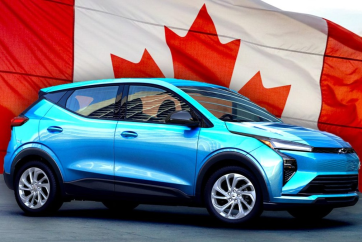
On February 16, 2026, Canada may launch a new federal program to support the purchase or leasing of electric vehicles — the Electric Vehicle Affordability Program (EVAP). It provides incentives for consumers and businesses and is part of the government's broader automotive strategy, which also includes steps to develop charging infrastructure and support the auto industry.
How much can you get
At launch, the program provides the following maximum amounts:
- up to $5,000 — for battery-electric and fuel-cell electric vehicles;
- up to $2,500 — for plug-in hybrids (PHEVs).
An important difference with EVAP is that the incentives will decrease over time. According to the official ISED backgrounder, the schedule looks like this:
| Category | 2026 | 2027 | 2028 | 2029 | 2030 |
|---|---|---|---|---|---|
| Battery electric / Fuel-cell | $5,000 | $4,000 | $3,000 | $3,000 | $2,000 |
| Plug-in hybrid (PHEV) | $2,500 | $2,000 | $1,500 | $1,500 | $1,000 |
Who and what cars are eligible for the program
Key rules already published by the government:
- The incentive will apply to purchases or leases;
- Price limit for eligible cars: final transaction value up to $50,000 inclusive;
- Exception: for electric vehicles manufactured in Canada, the $50,000 limit does not apply;
- Eligible models must be manufactured in Canada or imported from countries with which Canada has free trade agreements (FTAs).
Transport Canada notes separately that additional details about the program will be released later (in particular, which models will be on the list).
How it will work in practice
The Ukrainian publication Ukrnews.ca reports (with reference to the government's announcement and quotes from the Minister of Transport) that compensation is planned to be provided directly at the car dealership at the time of purchase. Global News also cites a similar detail, quoting the Minister of Transport regarding the point-of-sale mechanism.
Why is the government doing this?
Official materials describe EVAP as a tool that will:
- lower the “price” barrier to switching to EVs (affordability is cited as one of the main deterrents);
- strengthen domestic demand while supporting Canadian manufacturing (through an exemption from the price cap for Canadian-made vehicles);
- in the longer term, stimulate infrastructure scaling (the same strategy mentions the development of a charging network).
The government also predicts that the program could stimulate the sale of over 840,000 new EVs.
What to do if you are planning to buy
- Check the list of eligible models as soon as it is published on the program page.
- Check with the dealer how the discount applies to the deal (purchase/lease, point-of-sale).
- Keep in mind that incentives will gradually decrease in 2027–2030 if the purchase is not urgent.
Source UkrNews.