
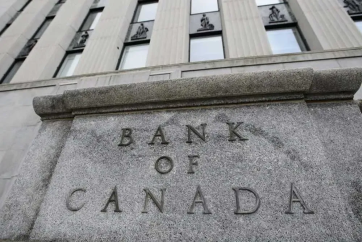
On October 28, 2026, the Bank of Canada announced an increase in its key interest rate from 2.25% to 2.5%. This decision could affect the cost of mortgages, loans, lines of credit, and the financial plans of many Canadian families.
For those who are already paying off a mortgage or planning to buy a home, this news is particularly important. After all, even a small rate increase can raise monthly expenses.
Let’s take a look at why the Bank of Canada made this decision, who will be most affected, and what to keep in mind in the near future.
What exactly has changed?
The Bank of Canada raised its key interest rate (overnight rate) by 0.25 percentage points.
New figures:
- Key Interest Rate (Policy Rate): 2.5%.
- Previous rate: 2.25%.
- Increase: 0.25 percentage points.
- Bank Rate: 2.75%.
- Deposit Rate: 2.45%.
The policy rate is one of the main tools the central bank uses to influence the country’s economy.
Simply put, when the Bank of Canada raises the rate, borrowing money usually becomes more expensive. Commercial banks may adjust their interest rates, and this is gradually reflected in loans, mortgages, and other financial products.
However, this does not mean that all bank rates will automatically increase by exactly 0.25%.
Why did the Bank of Canada raise the rate?
The main reason is inflation, which remains higher than expected.
According to the Bank of Canada’s estimates, inflation may remain near 3% for much of 2027. A return to the central bank’s target level of around 2% is projected for approximately mid-2028.
Several factors are driving price increases.
High Energy Prices
Rising prices for oil, gasoline, and other energy resources are increasing costs not only for drivers but also for businesses.
As the cost of transporting, producing, and delivering goods rises, some of the additional costs are ultimately passed on to consumers.
Trade Tensions with the U.S.
New U.S. tariffs and Canada’s corresponding trade measures are creating additional uncertainty for businesses.
Companies that import goods, equipment, or raw materials may face rising costs. This can also affect final prices for consumers.
Inflation Is Declining More Slowly Than Expected
When prices continue to rise faster than the desired 2% per year, the central bank can use higher interest rates to curb demand and gradually reduce inflationary pressure.
However, there is a catch: expensive loans can simultaneously slow down economic activity. Therefore, the Bank of Canada must strike a balance between price stability and supporting economic growth.
How Will This Affect Mortgages in Canada?
For homeowners, the implications will depend primarily on the type of mortgage.
If You Have a Variable-Rate Mortgage
Homeowners with variable-rate mortgages may feel the effects of a rate hike fairly quickly.
Banks typically tie these loans to their own prime rate, which may change following a decision by the Bank of Canada.
Depending on the terms of the contract:
- Your monthly payment may increase.
- Your payment may remain the same, but a larger portion of it will go toward interest.
- The rate at which the principal is paid down may change.
For example, if the mortgage balance is 400,000 CAD, a 0.25-point increase in the interest rate would mean approximately 1,000 CAD in additional interest per year, assuming the outstanding balance remains unchanged.
This is an approximate calculation, not an exact increase in annual payments. The actual amount depends on the loan terms, repayment schedule, and how interest is calculated.
If You Have a Fixed-Rate Mortgage
For fixed-rate mortgage holders, the situation is different.
If your current mortgage agreement specifies a fixed interest rate, the Bank of Canada’s decision will not change it until the end of the applicable term.
However, when you renew your mortgage, the terms may be different.
It’s important to understand that fixed mortgage rates depend not only on the Bank of Canada’s key rate but also on conditions in the bond market and other economic factors.
Therefore, an increase in the key rate does not necessarily mean that all new mortgage loans will become more expensive.
What Will Happen to Loans and Lines of Credit?
A rate hike may affect more than just mortgages.
Special attention should be paid to financial products with variable interest rates:
- Home Equity Line of Credit (HELOC) — lines of credit secured by real estate.
- Personal Line of Credit — personal lines of credit.
- Variable Rate Loans — loans with variable interest rates.
- Business Lines of Credit — lines of credit for businesses.
If a bank raises its prime rate, servicing these debts could become more expensive.
For example, for a line of credit with a balance of 20,000 CAD, a 0.25 percentage point increase in the rate would mean approximately 50 CAD in additional interest per year, assuming the outstanding balance remains unchanged.
At first glance, the amount seems small. However, for families who are simultaneously paying off a mortgage, an auto loan, and other debts, these additional costs can add up.
Will It Become More Expensive to Buy a Home?
For people planning to purchase their first home in Canada, the Bank of Canada’s decision also matters.
Higher interest rates can affect:
- The maximum mortgage amount a bank is willing to approve.
- The size of monthly payments.
- The total cost of the loan.
- The affordability of housing.
This is particularly relevant for buyers in Calgary, Edmonton, and other cities in Alberta, where many Ukrainian newcomers are considering purchasing their own homes.
At the same time, it would be wrong to conclude that real estate prices will inevitably start to fall after a rate hike.
The housing market is also influenced by the number of available properties, population migration, buyer income, construction activity, and local demand.
What about savings and deposits?
For people with savings, an interest rate hike can be good news.
Banks may offer higher interest rates on certain savings products, including:
- High-Interest Savings Accounts (HISA).
- Guaranteed Investment Certificates (GIC).
- Certain savings accounts with variable interest rates.
However, this does not guarantee an automatic increase in interest rates on all deposits.
If you’re planning to open a GIC or have a significant amount of money in a savings account, it’s worth comparing the current offers from various financial institutions.
Will the decision affect rent?
The key interest rate does not directly determine the amount of rent.
However, an indirect impact is possible.
For example, owners of investment properties with variable-rate mortgages may face higher mortgage costs.
Some landlords may try to offset these costs by raising rent, if market conditions and provincial laws allow it.
At the same time, rental costs depend primarily on local demand, housing supply, and other economic factors.
Therefore, it would be incorrect to say that rent will inevitably rise because of a single decision by the Bank of Canada.
What Should Ukrainians in Canada Do Right Now?
First and foremost, there’s no need to panic or rush to change your financial plans.
A 0.25 percentage point increase doesn’t mean a sharp rise in the cost of all loans. However, this is a good time to review your financial obligations.
If you have a variable-rate mortgage, check whether your monthly payment will change and how this will affect your remaining balance.
If your mortgage term is about to expire, start comparing offers from banks in advance.
If you have lines of credit, confirm the current interest rate and consider whether it might be worth paying off part of the debt sooner.
And if you’re planning to buy a home, don’t base your decision solely on the maximum amount the bank is willing to lend. It’s important that your monthly payment remains manageable even if interest rates change in the future.
When is the Bank of Canada’s next decision?
The next scheduled announcement regarding the key interest rate is set for December 9, 2026.
Until then, the Bank of Canada will continue to assess inflation, the state of the economy, the labor market, and international economic risks.
Whether there will be another rate hike will depend on how the situation develops. At this point, there is no reason to assume the next decision is a foregone conclusion.
What does this mean for Canada as a whole?
The increase in the key interest rate to 2.5% indicates that fighting inflation remains a key priority for the Bank of Canada.
On the one hand, the economy is showing signs of recovery. On the other hand, high energy prices, trade conflicts, and uncertainty in the global economy are creating new risks.
For ordinary Canadians, this means that in the near future, they should be more careful about credit obligations, planning major purchases, and managing their household budgets.
The key point isn’t the 0.25% rate hike itself, but how it will affect your specific financial situation. For some families, the changes will be almost imperceptible; for others, they may prompt a reevaluation of expenses or home-buying plans.