
A tragedy occurred in Banff National Park, serving as yet another reminder of just how dangerous mountain lakes and rivers can be, even in warm summer weather.
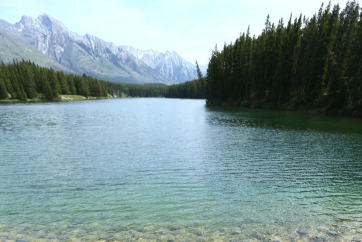
A 29-year-old man from Banff drowned in Johnson Lake. According to police, emergency services received a report of a swimmer who had gone underwater and had not resurfaced.
The Banff RCMP, Parks Canada rescue specialists, the Banff Fire Department, Alberta EMS, and Alpine Helicopters arrived at the scene. During the search and rescue operation, the man was pulled from the water, but efforts to save him were unsuccessful. He was pronounced dead at the scene.
The RCMP reports that the death is not considered suspicious.
What is known about the incident
The tragedy occurred at Johnson Lake—a popular recreational spot in Banff National Park, approximately 10 kilometers from the town of Banff, near Lake Minnewanka and Two Jack Lake.
This lake is well-known among locals and tourists alike: people come here to hike, swim, relax by the water, and spend time with family and friends. That is precisely why the news of the young man’s death has struck such a deep chord in the community.
According to reports, emergency services responded to a call about a swimmer in distress. By the time rescuers arrived on the scene, the situation was already critical.
This Is Not the Only Fatal Incident in the Bow Valley
On the same day, rescue services were responding to another tragic incident in the Bow Valley area.
The body of a 52-year-old man from Canmore was found in the Bow River near Canmore. He was discovered in the river near the Three Sisters boat launch. The circumstances surrounding this man’s death remain under investigation by the Canmore RCMP.
It’s important not to conflate these two incidents: the RCMP does not consider the Johnson Lake incident suspicious, whereas in the case of the Bow River, police are still working to determine exactly what happened.
But together, these news stories serve as a stark reminder to everyone spending their summer near the water in Alberta’s mountain regions.
Why Mountain Water Is So Dangerous
At first glance, mountain lakes may seem calm, clear, and safe. But that is precisely where the risk lies: danger is often not immediately apparent.
In Banff, Canmore, and other parts of the Rockies, the water can remain very cold even on a hot day. A person may enter the water when it feels warm at the shore, but within just a few minutes, the cold begins to affect the body, breathing, muscle strength, and the ability to swim normally.
Cold water can trigger a severe physical reaction, panic, loss of control over breathing, or rapid exhaustion. Even an experienced swimmer can find themselves in a situation where getting back to shore becomes much more difficult than it initially seemed.
Rivers pose another risk—the current. The Bow River and other mountain rivers can have cold water, hidden obstacles, varying depths, submerged trees, rocks, and sections where the current is stronger than it appears from the shore.
Things to Keep in Mind When Spending Time Near Water
Summer in Alberta is often short, and it’s understandable why people want to spend more time by lakes, rivers, and in national parks. But water in the mountains requires extra caution.
Before entering the water, you should realistically assess your abilities, the water temperature, the distance to the shore, and the surrounding conditions. Don’t swim far from shore if the water is cold or there’s no one nearby who can help quickly.
You need to be especially careful with children, people who can’t swim, tourists unfamiliar with local conditions, and those visiting the mountains for the first time.
A life jacket is not an “overreaction” and isn’t just for boats. In cold water or on open bodies of water, it can be the thing that gives a person enough time to wait for help.
It’s also important not to go into the water after drinking alcohol, not to jump into unfamiliar places, not to swim alone, and not to ignore signs or warnings at the site.