
For thousands of Ukrainians who have been living and working in Canada for several years, the issue of permanent residency remains one of the most important. Many families have settled here, found jobs, and enrolled their children in school, but still lack certainty about their immigration future.
On November 6, 2026, new details about Canada’s immigration policy were released. The federal government clarified its plans for granting Permanent Resident (PR) status to people already in the country.
Information regarding Ukrainians drew particular attention: up to 18,800 people who have applied under a special family reunification program may be eligible for expedited processing.
But does this apply to everyone who arrived under the CUAET? Will Ukrainians with open work permits be able to take advantage of these new opportunities? And why is there talk of 657,000 new permanent residents by 2027?
Let’s take a look at what we know so far.
What exactly did the Canadian government announce?
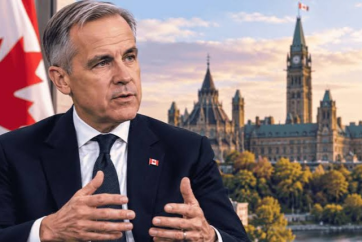
On November 5, the federal government presented its immigration plan for 2027–2029. The following day, representatives from Immigration, Refugees and Citizenship Canada (IRCC) provided additional details, and Prime Minister Mark Carney commented on the new policy during a press conference in Winnipeg.
The main idea is to help some people already living in Canada transition from temporary to permanent status.
To this end, the government is planning one-time measures that could potentially cover up to 200,000 people.
According to the published explanations, there are two main areas of focus:
- Up to 100,000 spots for people already working in Canada.
- Up to 100,000 spots for specific categories of applicants, particularly under family and humanitarian immigration programs.
This is an important difference from regular immigration programs. The government wants to focus not only on attracting new people from abroad but also on those already living in Canadian communities.
At the same time, the announced figures are maximum targets, not a guarantee that every applicant will be granted permanent residency (PR).
Up to 18,800 Ukrainians: Who Is Affected by the New Measures?
The most important news for the Ukrainian community relates to the Ukraine Family Reunification Pathway program.
This is a special immigration stream that Canada introduced in 2023 for certain categories of Ukrainians who were in the country and had close relatives with Canadian citizenship or permanent resident status.
The application period for the program has already ended, but many people are still awaiting a final decision.
According to reports from the IRCC briefing on November 6, measures to expedite processing could cover up to 18,800 Ukrainians who submitted applications under this program.
For families who have been waiting for a long time, this is encouraging news.
However, there is a key caveat: 18,800 does not represent the number of applications already approved, nor is it a promise to automatically grant permanent resident status to all program participants.
Each application must still meet the established immigration requirements.
What about Ukrainians who arrived under the CUAET?
This is likely the question that most concerns Ukrainians in Calgary, Edmonton, and other Canadian cities.
After Russia’s full-scale invasion began, Canada introduced the Canada-Ukraine Authorization for Emergency Travel (CUAET). Thanks to these measures, many Ukrainians were able to come to the country, obtain temporary status, and receive a work permit.
However, from the very beginning, the CUAET was not a separate program for automatically obtaining permanent residence.
And the new announcements do not change this.
Having a CUAET or a valid work permit does not, in and of itself, grant an automatic right to permanent residence under the new measures.
For Ukrainians who have not applied through the Ukraine Family Reunification Pathway, the situation will depend on other immigration programs and the future conditions of the new pathway for workers.
Therefore, the announcement regarding the 18,800 Ukrainians should not be interpreted as a general legalization program for all CUAET participants.
New Pathway for Workers: Is There a Chance for Those Already Working in Alberta?
The government is paying special attention to people who already have jobs in Canada.
According to an official IRCC announcement, up to 100,000 workers and their family members will be able to transition to permanent residency (PR) in collaboration with the provinces and territories.
It is expected that the provinces will receive additional opportunities to nominate candidates based on the needs of the local labor market. Applicants who have already submitted applications under certain federal immigration programs may also be considered.
For Ukrainians working in Calgary or other cities in Alberta, this is a potentially significant opportunity.
But there’s a caveat: it has not yet been announced that every Work Permit holder will be able to submit a new application under this initiative.
The federal government must coordinate the selection process with the provinces, and the specific conditions will depend on the respective programs.
Therefore, Ukrainians already working in Alberta should monitor not only IRCC announcements but also updates from the Alberta Advantage Immigration Program (AAIP).
Who Else Can Benefit from These New Measures?
In addition to Ukrainians, the additional PR spots are intended for other applicants who are already in Canada and awaiting a decision.
These include:
- People from Hong Kong who have applied under special immigration programs.
- Spouses, partners, and dependent children of Canadian citizens and permanent residents.
- Applicants who have already been found eligible for permanent residency on humanitarian and compassionate grounds.
IRCC confirms its intention to complete the processing of remaining applications under the Ukrainian family reunification program and the corresponding programs for people from Hong Kong. The government also expects to reduce the long wait times for certain family-class categories.
Why is there talk of 657,000 new permanent residents?
Following the announcement of the new plan, a discussion arose in the Canadian media regarding the actual number of people who could obtain PR in 2027.
At first glance, it’s simple: the official immigration plan calls for 380,000 new permanent residents each year.
This is confirmed on the IRCC website.
However, new one-time measures could increase the total number of people transitioning to permanent resident status.
According to calculations provided in the reports from the technical briefing on November 6, the situation looks like this:
| Category | Estimated Number |
|---|---|
| Main immigration quota for 2027 | 380,000 |
| New one-time measure | Up to 200,000 |
| Expected transitions under previously announced measures | About 77,000 |
| Potential total | Approximately 657,000 |
Where do the additional 77,000 come from?
This is an estimate of the number of individuals who will transition to permanent residency (PR) under two previously announced initiatives for Protected Persons and certain categories of workers.
However, it is important to distinguish between the official plan and the projected estimate.
380,000 is the approved target for 2027. Approximately 657,000 is the potential total, taking into account additional one-time measures, and is not a new official annual quota.
Furthermore, the actual number of approved applications will depend on the implementation of the programs.
Why did the government decide to change its approach?
During a press conference in Winnipeg, Mark Carney drew attention to the situation of people who formally remain temporary residents, even though they have been living in Canada for a long time.
Among them are workers who have been employed by the same companies for years, families who have settled into local communities, and people who arrived from Ukraine and Hong Kong.
The government believes that for some of these people, it makes sense to complete the transition to permanent resident status rather than leaving them in limbo for years.
At the same time, Canada is trying to limit the overall rate of population growth driven by immigration. Therefore, the federal plan maintains the target for new permanent residents at 380,000 and presents the new measures as a temporary solution for the backlog of applications.
What Does the Opposition Say About the New Plan?
Not all Canadian politicians have reacted positively to the new measures.
Conservative Party Leader Pierre Poilievre criticized the government for how the immigration targets are presented.
According to the opposition, the additional one-time measures result in a significantly higher potential number of new permanent residents than the main target figure would suggest.
Critics also emphasize that immigration policy must take into account the availability of housing, jobs, and healthcare services.
The government, for its part, explains that the focus is primarily on people who already live in the country, rather than on hundreds of thousands of new arrivals from abroad.
It is important for Ukrainians to understand this distinction: when someone who has been living in Canada for several years obtains permanent residency (PR), it does not mean the arrival of a new immigrant.
What Should Ukrainians in Calgary Do Right Now?
Despite the positive news, it’s best not to jump to conclusions—especially if you arrived under the CUAET program, are working in Canada, but haven’t yet applied for PR.
First and foremost, you should:
- Check your current immigration status. Make sure your work permit or other documentation remains valid.
- Find out if you’ve already submitted an application for permanent residency. This may be important for participating in certain initiatives.
- Stay updated on news from IRCC and AAIP. Official announcements will determine the selection criteria.
- Don’t rely solely on the new program. If you meet the requirements for Express Entry or provincial programs, you should continue to explore these options.
- Do not trust promises of guaranteed PR. No announcement of additional spots waives immigration requirements.
For those who have already applied through the Ukraine Family Reunification Pathway, the news may mean the prospect of faster processing.
For Ukrainians with work permits who are still seeking a path to permanent residency, the following clarifications regarding provincial participation will be most important.
When will more information be available?
As of November 8, 2026, the detailed criteria for specific new initiatives have not yet been released.
Canadian media are reporting a possible additional announcement by Immigration Minister Lena Diab on November 9.
Therefore, it’s worth checking official IRCC announcements in the coming days. They will help clarify exactly who the new measures will cover and whether they will provide additional opportunities for Ukrainians.
Conclusion
For Ukrainians who have already built a life in Canada, the new immigration measures are important news.
The federal government has recognized the need to address the issue of long wait times for permanent residency (PR) for some people already living in the country.
This particularly applies to applicants under the Ukraine Family Reunification Pathway. According to information announced during the November 6 briefing and reported by Canadian media, this involves approximately 18,800 Ukrainians. This specific figure could not be independently confirmed in the official IRCC announcement, although the government has confirmed its intention to finalize the processing of applications under the program.
At the same time, the new measures do not mean automatic permanent residency (PR) for all Ukrainians with a CUAET.
For many Ukrainian families in Calgary and Alberta, this could present an additional opportunity. However, final conclusions can only be drawn once the detailed rules are published.