
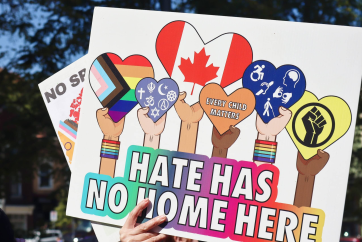
Conservative MP Glen Motz announced that on March 25, 2026, Bill C-9 passed its third reading in the House of Commons.
How MPs voted
According to the House of Commons, Bill C-9, officially titled the Combatting Hate Act, passed its third reading with 186 votes in favor and 137 against. The roll call vote confirms that Glen Motz and Pierre Poilievre voted against it, while Mark Carney voted in favor. But in addition to the Conservatives, five NDP MPs and Green Party MP Elizabeth May also voted against it.
What Bill C-9 is about
The bill itself concerns amendments to the Criminal Code of Canada regarding hate propaganda, hate crimes, and access to religious and cultural sites. The Canadian government explains that Bill C-9 is intended to create new offenses for intentionally obstructing access to places of worship and other protected spaces, for intimidation aimed at preventing people from entering such places, as well as a separate offense for hate-motivated crimes and a new offense for intentionally promoting hatred through the public display of certain hate or terrorist symbols.
Why the Controversy Over Religious Freedom Arose
It was precisely regarding religious freedom that one specific change sparked the most controversy. A comparison of the text of Bill C-9 at first reading and the text adopted by the House of Commons at third reading shows that the final version already includes the repeal of the defense related to the expression of views on religious topics or texts in cases involving the wilful promotion of hatred or antisemitism. In the final version, this is explicitly stated in the summary, as well as in the provisions that repealed paragraphs 319(3)(b) and 319(3.1)(b). It is precisely this change that critics of the bill refer to when discussing the risks to freedom of religious expression.
What’s in the final version
At the same time, the final text approved by the House of Commons is not limited to merely repealing this protection. It also includes a separate clarification provision stating that neither subsection 319(2) nor subsection 319(2.2) should be interpreted as prohibiting a person from speaking on matters of public interest, including making educational, religious, political, or scientific statements within the context of discussion, publication, or debate, provided the person does not wilfully promote hatred against an identifiable group. In other words, the bill as amended by the House of Commons simultaneously removes one specific defense provision but adds another clarification regarding the permissibility of religious and socially significant statements, provided they do not cross the line into intentionally inciting hatred.
What changes were made during the legislative process
Another important detail: in the initial version of the bill, the government also proposed removing the requirement for the Attorney General’s consent to initiate proceedings in cases involving hate propaganda. However, in the version that passed the House of Commons, this requirement was reinstated. This means that the text did indeed change during parliamentary review, and the current version is not identical to the one the government introduced in the fall of 2025.
Current Status of the Bill
As of now, Bill C-9 has not yet become law: according to LEGISinfo, following its third reading in the House of Commons, it is currently awaiting its first reading in the Senate.