
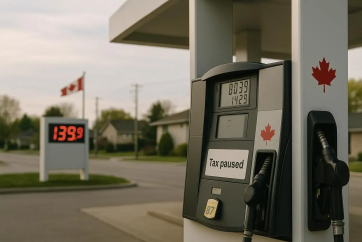
The Canadian government has extended the temporary exemption from the federal excise tax on gasoline, diesel, and aviation fuel. The Canadian Ministry of Finance announced this decision on September 2.
This means that Canadians will continue to pay less for fuel, and transportation companies, farmers, construction firms, and delivery services will have more time to adapt to high global energy prices.
How long will the exemption last?
Initially, the federal excise tax on fuel was suspended from April 20 to September 7, 2026. Now, the government has decided to extend the exemption until January 31, 2027.
After that, the tax will be reinstated gradually:
- From February 1 through March 31, 2027, only 50% of the standard excise tax rate will apply;
- Starting April 1, 2027, the federal excise tax will return to its full amount.
How much can you save?
According to government data, the temporary suspension of the excise tax results in savings of:
- 10 cents per liter of gasoline;
- 4 cents per liter of diesel fuel;
- 11 cents per liter of aviation gasoline;
- 4 cents per liter of other aviation fuel.
After the tax break was introduced in April, the average price of gasoline at gas stations dropped by approximately 11 cents per liter on the very first day.
Why did the government decide to extend the program?
The Ministry of Finance explains that global fuel prices remain volatile due to international conflicts, particularly in the Middle East, as well as trade disputes with the U.S. This directly affects the cost of living in Canada.
According to Finance Minister François-Philippe Champagne, extending the tax relief should help families and businesses reduce their daily expenses and partially offset the rise in fuel prices.
How much will this cost the budget?
The federal government estimates that this additional extension of the program will cost approximately $2.9 billion. The total amount of tax relief under this initiative for 2026–2027 will be about $5.3 billion.
Will Gas Get Cheaper?
It’s important to remember that the federal excise tax is just one component of the cost of fuel. The final price is also influenced by global oil prices, exchange rates, logistics, provincial taxes, and competition among gas station chains.
However, the extension of the tax relief means that until the end of January 2027, drivers will continue to pay less than they would at the standard federal excise tax rates.