
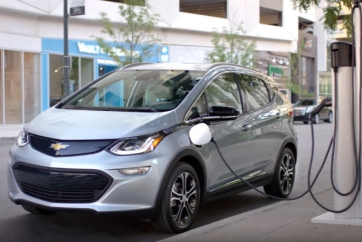
On February 5, 2026, Canadian Prime Minister Mark Carney announced a new automotive strategy that includes the restoration of federal incentives for the purchase/leasing of electric vehicles, large-scale investments in charging infrastructure, and the abolition of the Electric Vehicle Availability Standard (EVAS) — the so-called EV mandate.
Return of EV subsidies: how much and when
The government is launching a five-year, $2.3 billion EV Affordability Program. It provides incentives of:
- up to $5,000 for battery-electric and fuel-cell EVs;
- up to $2,500 for plug-in hybrids (PHEVs).
The background to the strategy specifies that Canadians will be able to start receiving these incentives from February 16, 2026, and the amount of payments will decrease annually (according to the scale provided by the government until 2030).
Important conditions (price and country of origin)
According to the government release, there is a restriction for cars imported from countries with which Canada has free trade agreements: the final transaction cost is up to $50,000. However, this $50,000 limit does not apply to Canadian-made EVs and PHEVs. The backgrounder further states that eligible EVs/PHEVs must be manufactured in Canada or imported from FTA countries.
$1.5 billion for charging infrastructure
A separate part of the strategy is to strengthen the charging network: the government has announced $1.5 billion in investments through the Canada Infrastructure Bank initiative to make charging “easier and more convenient” across the country.
Stricter emissions standards instead of mandates
The government has announced that it is moving from “strict quotas/mandates” to stricter greenhouse gas emissions standards. The announced goal is to reach 75% EV sales by 2035 and 90% by 2040.
It also specifies that stricter standards will be introduced for model years 2027–2032, and the EVAS (Electric Vehicle Availability Standard) is planned to be abolished so that manufacturers can use a “broader set of technologies” and respond more flexibly to demand in the short term.
For context: the previous policy framework set interim targets — specifically, at least 20% of new passenger cars as ZEVs by model year 2026 and 60% by 2030 (these benchmarks appeared as targets in federal documents).
Support for the auto industry and workers
Among the economic measures, the government announced:
- $3 billion from the Strategic Response Fund and up to $100 million from the Regional Tariff Response Initiative — for auto sector adaptation, growth, and market diversification;
- Support for workers: specifically, $570 million in investments in employment assistance and retraining (the government mentions potentially up to 66,000 people).
What this means for buyers
Subsidies will return in February (starting February 16, 2026).
For many models, a price threshold of $50,000 will apply (for imports from FTA countries), but Canadian production will be exempt from this limit.
At the same time, the government promises to expand the charging network and introduce stricter emission standards without a formal EV mandate.