
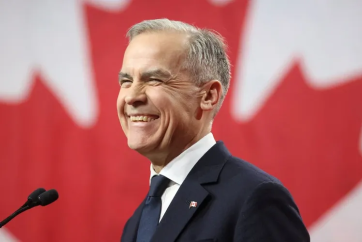
In recent days, reports that Canada might allegedly obtain associate member status in the European Union—or even consider full membership in the future—have been widely discussed in Canadian and international media. However, Canadian Prime Minister Mark Carney has clearly stated: Canada does not seek to join the EU.
According to Carney, the country is not interested in membership, but rather in creating a “unique alliance” with the European Union. This involves deepening cooperation in the areas of security, the economy, investment, energy, the defense industry, and cutting-edge technologies. The prime minister emphasized that the world is becoming increasingly unstable, so democratic states must cooperate more closely with one another.
The discussion arose following reports in Western media that Ottawa is exploring the possibility of a new format for cooperation with the EU. This is precisely what sparked speculation about possible “associated membership.” At the same time, Carney himself emphasized that such reports do not imply any intention on Canada’s part to join the European Union.
The strengthening of relations between Canada and the EU is taking place against the backdrop of an escalating trade conflict with the United States. The Canadian government is actively working to diversify its foreign trade and expand economic ties with European partners in order to reduce its dependence on the U.S. market.
Later this week, Mark Carney will visit Strasbourg, where he will address the European Parliament at the invitation of its President, Roberta Metsola, and participate in events marking the annual address by European Commission President Ursula von der Leyen. Meetings with European leaders are also scheduled, during which issues of trade, investment, security, and joint economic projects will be discussed.
Canada already has close economic ties with the European Union. The EU is Canada’s second-largest trading partner after the United States, as well as its second-largest source of foreign direct investment. Over the past year, the parties have launched a new strategic partnership, signed a cooperation agreement on security and defense, and Canada became the first non-European country to join the SAFE defense initiative.
Thus, Ottawa is not changing its international course and is not raising the issue of joining the European Union. Instead, the government seeks to build a new format of relations with its European partners—one that goes deeper than traditional cooperation, but without acquiring the status of an EU member state.