
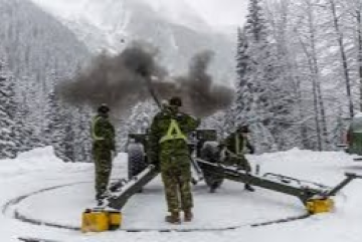
The Canadian Armed Forces will cease conducting avalanche control operations in the mountain passes of Western Canada. This marks the end of Operation PALACI—one of Canada’s longest-running military missions, which has helped ensure safe passage through Rogers Pass in British Columbia for over six decades.
According to the Department of National Defence, the current agreement between the military and Parks Canada will not be renewed after it expires in August 2027. The reasons cited include shifting defense priorities, operational requirements, and the gradual decommissioning of older artillery systems used to support the Parks Canada program.
What is Operation PALACI
Operation PALACI is the Canadian Armed Forces’ support for Parks Canada’s avalanche control program at Rogers Pass, British Columbia. The Trans-Canada Highway and the Canadian Pacific Railway line, which connect British Columbia with other parts of Canada, pass through this pass. The goal of the operation is to reduce the risk of large, uncontrolled avalanches that could block vital road and rail routes.
The operation is conducted under an agreement between the Department of National Defence and Parks Canada, as Rogers Pass is located on federal land within Glacier National Park.
Why Rogers Pass Is So Important
Rogers Pass is considered one of the most challenging and dangerous transportation corridors in North America in terms of avalanche risk. According to the Government of Canada, the pass is located at an elevation of approximately 1,330 meters and has over 130 avalanche paths that cross the Trans-Canada Highway. It also has the highest avalanche danger rating in Canada and the third highest in North America.
During the winter, up to 4,000 vehicles and 40 trains pass through Rogers Pass daily, so keeping the route open and safe is critical for the economy, logistics, and daily transportation between British Columbia and the rest of Canada.
The Scale of the Avalanche Threat
Parks Canada notes that approximately 2,000 avalanche events are recorded annually along the Trans-Canada Highway corridor through Rogers Pass. On average, about 20 avalanches per year impact the highway with snow mass, and another 80 or so due to snow dust and wind. That is why avalanche control in this area has been critical to transportation safety for decades.
What Will Change After 2027
Once the agreement expires in August 2027, the Canadian Armed Forces will no longer perform this role in its current format. According to reports, the military and Parks Canada are already discussing a transition period to ensure that issues regarding transportation safety and responsibility for avalanche control are resolved before the partnership ends.
It has not yet been definitively announced what system will replace the military’s involvement in avalanche control. Parks Canada will likely have to transition to civilian or technologically different methods of avalanche risk management, though specific details are to be announced later.
Why It Matters
The end of Operation PALACI marks a significant change for Western Canada. For decades, the military has assisted Parks Canada in mitigating avalanche risks along one of the country’s most dangerous transportation corridors. This work enabled roads to reopen more quickly following controlled snow releases and reduced the risk of large, uncontrolled avalanches.
For drivers, carriers, tourists, and local communities, the key question now is how avalanche control will be organized after 2027. Rogers Pass remains a strategic route, and the safe operation of the Trans-Canada Highway and the railway in this area will continue to be of great importance.
Conclusion
Canada is preparing to conclude one of its oldest military missions—Operation PALACI. After more than 60 years of involvement in avalanche control at Rogers Pass, the Canadian Army will cease this work upon the expiration of its agreement with Parks Canada in August 2027.
The decision is linked to shifting defense priorities and the modernization of military resources. At the same time, Rogers Pass remains one of Canada’s most critical and dangerous winter transportation corridors, so the issue of future avalanche control will be crucial for the safety of the roads, the railway, and the people who use this route every day.