
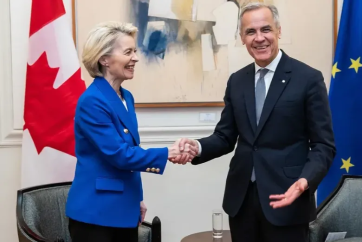
The European Union has taken an unprecedented step in its relations with Canada. During the annual State of the European Union address, European Commission President Ursula von der Leyen proposed beginning work toward making Canada the first-ever associate member of the EU. Such a status is not currently provided for in the European Union’s founding treaties, so its creation would represent a significant change in European policy.
Ursula von der Leyen made her statement in the presence of Canadian Prime Minister Mark Carney, who was visiting the European Parliament in Strasbourg. She emphasized that the current geopolitical situation calls for a new format of partnership between democratic countries.
According to the European Commission President, Europe and Canada are united by shared values and a common vision of key global challenges—from security and support for Ukraine to the development of artificial intelligence, the protection of critical infrastructure, the fight against climate change, and cooperation in the Arctic. That is why she proposed moving from the current CETA trade agreement to a much deeper strategic partnership.
This is not just about trade. The parties plan to expand cooperation in the fields of high technology, critical minerals, energy, the defense industry, cybersecurity, artificial intelligence, and modern manufacturing. Special attention is being paid to joint projects in the Arctic, which is becoming increasingly strategically important.
At the same time, it is important to understand that this does not mean Canada will join the European Union. Mark Carney had previously stated that Canada does not seek to become an EU member state but is instead looking to forge a “unique alliance” with Europe that would allow for a significant deepening of economic and strategic partnership without full membership.
The initiative emerged against the backdrop of deteriorating trade relations between Canada and the United States. Following the escalation of the trade conflict, Ottawa has been actively working to diversify its international economic ties and expand cooperation with European partners.
Despite the high-profile announcement, no decision has yet been made. The status of “associate member” does not currently exist under EU law, so its introduction would require the support of member states and the development of a new legal framework. Some European diplomats are already expressing caution about this idea and emphasize that a complex negotiation process lies ahead.
If the initiative is implemented, it will set a historic precedent. Canada could become the first country in the world to establish a new type of relationship with the European Union—one that goes beyond a traditional free trade agreement but does not involve full membership. This could open up new opportunities for economic cooperation, the development of joint technology projects, and the strengthening of the strategic partnership between the two sides of the Atlantic.